“After fifteen years of raising the alarm with one doctor after another, MD was diagnosed”
Life with MD
Ciska & Doenja
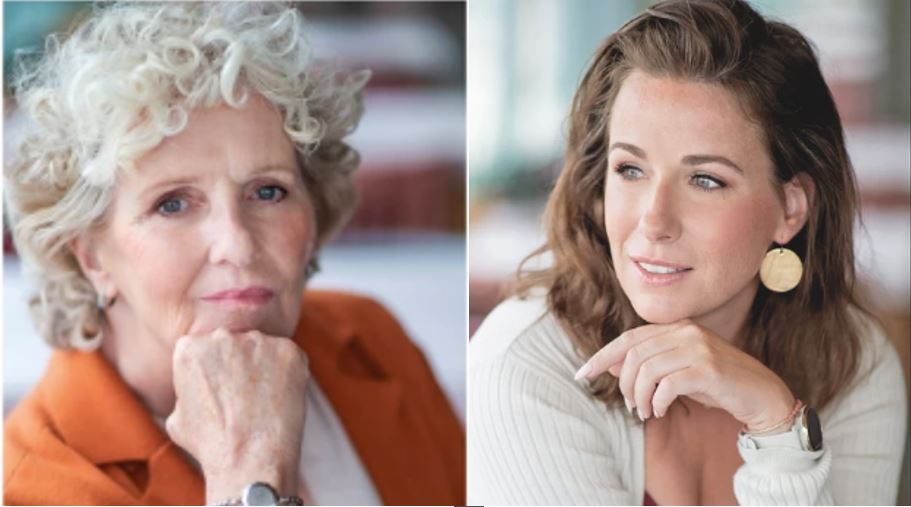
“We live day by day and look for happiness in small things.” Cisca van Eldik-Rangé and her daughter Doenja de Bruin are both battling the severe and most common muscle disease, Myotonic Dystrophy. A cure is not possible, since there is not yet a medicine. “We try to hold on to life for as long as we can.”
Cisca: “Looking back, there were signs that something was seriously wrong. I grew up in an area with hills and mountains. I cycled to school and always felt my legs burning with lactic acid. At school I couldn’t keep up physically. I was the slow one who couldn’t high-jump, the lazy girl who couldn’t perform. My mother was tough. If I had stomach pain, which was often, she’d say: ‘Put some cream on it, it’ll pass.’
But it didn’t pass. I was tired, tired, and tired again. As the years went by, more and more complaints piled up. I got married and had two daughters, Doenja and Cynthia. One day I developed a yellowish complexion. The gastroenterologist found extremely high liver values and suggested I stop drinking alcohol and using drugs entirely. What kind of remark was that?! I wanted nothing to do with alcohol and drugs. His comment says everything about the ignorance I dealt with for decades. With constantly changing complaints, I kept going back to the GP and the hospital. I had intestinal problems and underwent every unpleasant test you can imagine. Without result. I needed cataract surgery at forty. And I felt strange shooting pains in my hand, which sent me to the rheumatologist. I was treated for intermittent claudication (‘shop-window legs’), suddenly developed swollen feet out of nowhere, and woke up with pain in my neck and shoulder. Some of those complaints I put down to my physically demanding job. Until the moment I had no choice but to raise the alarm and ended up in hospital with severe heart problems. On the cardiac ward, doctors discovered that in the hours before, I had suffered several heart attacks and that my heart was functioning at only fifteen percent. The cardiologist was baffled, because he told me I had the arteries of an eighteen-year-old.”
A strange kind of relief
“Nobody really knew what was wrong with me. Because I constantly felt I wasn’t being taken seriously, I unconsciously started going to the GP less and less.
Until I met a rheumatologist I’d never spoken to before. A professor, seventy-two years old. The day after our conversation, she called me. My story had haunted her all night and she wanted to examine me further. ‘I think I know that you have a muscle disease,’ she said. She turned out to be right: in December 2018, after fifteen years of raising the alarm with one doctor after another, I was finally diagnosed. I turned out to have MD, Myotonic Dystrophy type 1, a muscle and tissue disease caused by a fault in the DNA. Besides the muscles, it affects important organs such as the lungs, brain and heart. It’s a fatal disease, and there is still no cure. Truly every single complaint I’d had throughout my life turned out to be a symptom of MD. When I heard that, I felt a wave of relief. Recognition. Finally I knew what was wrong with me. I wasn’t crazy — I really was sick. A strange kind of relief, of course, because I was immediately told how serious my disease was: most people with MD die between the ages of 45 and 65 from heart or lung problems. The most heartbreaking news was still to come: there is a fifty percent chance of genetically passing the DNA fault on to the next generation — whether I had inherited it from my own parents could no longer be traced — and if the disease is passed on genetically, it becomes more severe with each generation. In other words, it’s the children who are hit hardest. That terrible fact became our harsh reality when our daughter Doenja was diagnosed with MD type 1.”
A body like a 1.0-litre engine
Doenja: “I was 32 at the time. With the diagnosis, the pieces of the puzzle seemed to fall into place, because just like my mother, I had struggled for years with unexplained complaints and terrible fatigue. I used to work 45 hours a week as a service advisor, but within three years my condition deteriorated so much that I could barely manage two hours. I’m in the process of being declared unfit for work and getting home help, but I do everything I can to keep moving for as long as possible. I’m under the care of Radboud University Medical Center, I train according to a therapeutic programme at the Papendal sports centre and the Klimmendal rehabilitation centre, and I eat healthily with a strong focus on vitamins, minerals and protein. The therapies are aimed at easing the symptoms. Does it help? Honestly, I can’t say for sure. My body still feels like a prison. You can’t see anything from the outside, which makes it even harder. Many friends have drifted away because they ‘couldn’t count on me’ whenever I cancelled another appointment because I physically couldn’t manage it. My physiotherapist explains it like this: in my old life, I was like a race car with a V12 engine. I could climb any mountain effortlessly. But now my body is just a little 1.0-litre engine, and I’m still trying to drive it up the Alpe d’Huez. That’s simply not possible anymore. The strength is gone, and my disease has already progressed so far that I’m worse off now than my mother was at 35.”
Guilt
Cisca: “The thought that I did this to my own child is unbearable. It hurts so much that I passed my disease on to her; I well up just saying it out loud. If only I had known. Because, strange as it sounds, the DNA fault that Myotonic Dystrophy essentially is can be corrected if you choose to have children through IVF. Had I known I was sick, I would never have wanted to get pregnant the natural way, knowing I carried a high risk of passing the disease on. Our family would have been spared so much misery.” Doenja: “My mother and I can talk openly about the guilt she struggles with. She didn’t know anything — there’s nothing to blame her for. But I understand the darkness she’s fighting. I deal with it too. There’s an intense sadness, for instance, behind my suggestion to my husband Cor that he should just divorce me. There’s so much I can’t do anymore. When he walks behind me, literally pushing me up a slope, I think: no, please, not like this anymore. Let him live a normal life with a healthy wife.
Small happiness
Cisca: “I often think the same about my marriage to my husband Bert. I’ve changed. When I laugh, my eyes no longer laugh along, and in the mirror I see a blank, vacant look. My speech is deteriorating and sometimes my tongue doesn’t cooperate, so it sounds like I’m slurring drunk. I might as well joke about it. However many jokes I make, I can see Bert struggling with my illness, even though he puts on a brave face. Our home used to be a place people dropped in on all the time, but over the years many friends have drifted away. It’s terribly hard for me that my MD has cost us so many social connections. How do you cope with knowing that your death sentence has already been signed? Mostly by trying to see the happiness in small things. I try to hold on to life for as long as I can. People don’t understand that Doenja can do so little, and that I can still do just a bit more than her. I can’t make them understand that this disease gets worse with every generation.”
Doenja: “That weighed heavily on my husband and me when it turned out I was pregnant with our son Joël. His arrival wasn’t planned, and I called the hospital the moment I found out I was pregnant. We could have had a genetic test done, but we chose not to. As long as he doesn’t show any symptoms, we won’t do anything. Radboudumc keeps a close eye on him. Once you’ve essentially already signed your own death sentence, like I have, you can choose to live big and go all in — set yourself goals and chase them for as long as your body can manage. Or, like my mother and I do, you can live day by day and look for happiness in small things. We live in a house in the countryside, with open views at both the front and back. We watch the sun rise and set — I think that’s beautiful. ‘Mama, the colours are coming,’ Joël calls out when we watch the sky change from blue to pink-red. We watch the planes fly over together, and on the best days we head out in our vintage car. It might sound strange, but I feel genuine satisfaction when I manage to get through the small to-do list I had in my head by the end of the day.
Energy drain
Cisca: “I recognise that so much. Soon, hopefully, the municipality will provide me with a walking bike so I can get out and about. Bert and I have a camper van, and we love nothing more than taking off in it. Sometimes just to a campsite five kilometres from home, but what does it matter. Sitting in front of the camper with a cup of coffee in front of me, I feel happy. I feel that too with the unexpected kindnesses I receive. Like from a neighbour who gave me her phone number. ‘If you ever need help walking the dog, just message me. I don’t want a cup of coffee, I don’t want anything. Just call me and I’ll grab the leash. I know things are hard for you.’ That touches me. So does a conversation with former colleagues. My world has become small. Sometimes I barely know what’s going on in the country anymore, because the disease drains me and my energy. But when I sit at the table with them, I feel worthy again and enjoy the chatter and the small talk. I would have loved so much for life to have turned out differently. I choose to cherish my family, the friends who are still in our lives. That’s where I find my positivity. All we have is each other.