“You always looked for the things
you could still do.”
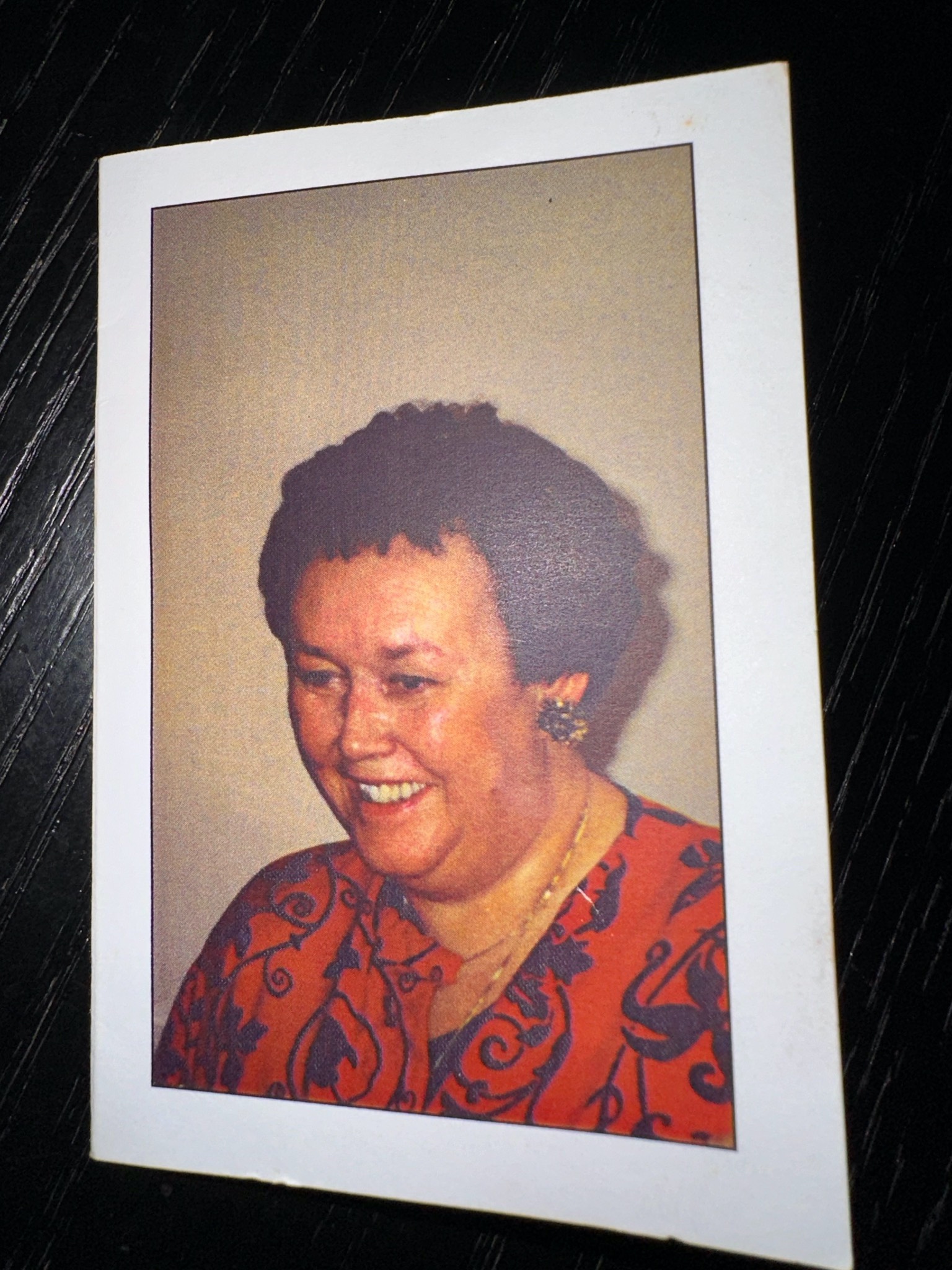
Enlarged
Jenny
Dear mum,
Creative, sporty, loving and clever mum. You were always there for friends and family, ready to help whenever it was needed. But when you started having more and more physical complaints yourself, you hated being helped.
Those vague complaints – stomach ache, cramp in your hand, falling asleep during the day – all turned out to be connected once it became clear you had an unknown muscle disease. Steinert’s disease, also known as Myotonic Dystrophy (MD). As a teenage daughter, I didn’t want to know anything about it. ‘What good is a mother who can’t do anything anymore.’ And I pushed you away even more because of it, just so I wouldn’t have to feel the pain.
Not being able to do your own grocery shopping anymore, not being able to lift things, struggling to walk, no longer being able to cycle, having to stop working at the little tobacco shop, and so on. Only now do I realise how awful that must have been for you. And you always looked for the things you still could do. Like meeting up with your friends, and embroidering in your corner of the sofa. You did this for hours, producing beautiful sampler cloths and birth announcement cards. That’s how you found your distraction from a decline that started far too early for you.
We still knew little about the disease, and only realised it was fatal when you died of cardiac arrest. You were only 53, and there was still so much I wanted to say to you, ask you, share with you. There are some things I’m glad you didn’t have to go through, like the deaths of your grandson Lars and your daughter Anouk.
In a few years I’ll be the same age you were. And I will have lived longer without you in my life than with you. A strange thought, and an intensely sad one to realise. Thankfully you’re still in my thoughts every day, drifting along with me on your little cloud. I know you would be proud of me for standing up on behalf of our family to help rid the world of MD. First by telling the hard truth and drawing attention to this terrible disease. And then, through donations, by making it possible to speed up the development of medication, so that this family tragedy can be spared for other families.